


Page 64 - Studia Universitatis Hereditati, vol 13(2) (2025)
P. 64
the environment for economic, social, and cul-  from burials and graves (Blečić Kavur 2015). As
               tural purposes. Geographical and geological ad-  a result of archival research and new systemat-
               vantages, together with control over major mar-  ic and rescue excavations Čaušević-Bully et al.
               itime communication routes, enabled Osor to   2017; Los 2018; Bully et al. 2024; Baričević et al.
               develop strong socio-economic potential, com-  2025), a substantial body of new data has been
               parable  to  that of  mainland  and  other insular   obtained concerning the topography and typol-
               centres. In this context, the island setting itself   ogy of graves. These data have been fully evalu-
               – despite its inherent constraints – did not rep-  ated and interpreted in their mutual intercon-
               resent an obstacle, but rather a framework with-  nections, revealing burial grounds distributed
               in which Osor progressively developed through   across several different locations both within
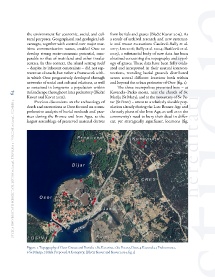
               networks of social and cultural relations, as well   and beyond the urban perimeter of Osor (fig. 1).
               as sustained in long-term a population within   The three necropolises presented here – at
        64     its landscape throughout later prehistory (Blečić   Kavanela–Preko mosta, near the church of Sv.
               Kavur and Kavur 2025).                      Marija (St Mary), and at the monastery of Sv. Pe-
                   Previous discussions on the archaeology of   tar (St Peter) – attest to a relatively sizeable pop-
        studia universitatis hereditati, letnik 13 (2025), številka 2 / volume 13 (2025), number 2
               death and excavations at Osor focused on a com-  ulation already during the Late Bronze Age and
               prehensive analysis of burial methods and prac-  the early phase of the Iron Age, as well as to the
               tices during the Bronze and Iron Ages, as the   community’s need to bury their dead in differ-
               largest assemblage of preserved material derives   ent, yet strategically significant, locations (fig.


               Figure 1: Topography of Osor Graves and Burials: 1 Sv. Katarina, 2 Sv. Petar, 3 Osor, 4 Kavanela, 5 Preko mosta,
               6 Sv. Marija, 7 Mala Prepoved, 8 Konopičje (Blečić Kavur and Kavur 2024, fig. 1)

