


Page 255 - Weiss, Jernej, ur./ed. 2026 Skladateljska društva nekoč in danes.../Composers’ Societies Past and Present...
P. 255
The Sarajevo Period of Dane Škerl’s Artistic Activity
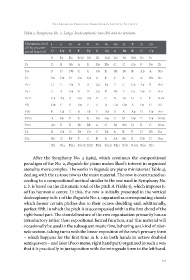
            Table 3: Symphony No. 2. Largo. Dodecaphonic raw (Pi) and its versions.

             Chromatic total  i  ii  iii  iv  V  vi  vii  viii  ix  X  xi  xii
             of the precom-
             posed material  D  D#  E  F   F#  G   G#  A    Bb  B   C   C#
                          li  Ix  lix  Iviii liii  lii  Ixii  Ixi  Ivi  Ivii  liv  Iv
             Pi           D   B   Bb  A    E   Eb  Db  C    G   G#  F   F#   Ri
             Piv          F   D   Db  C    G   Gb  E   Eb   Bb  B   Ab  A    Riv
             Pv          F#   D#  D   C#   G#  G   F   E    B   C   A   Bb   Rv
             Pvi         G    E   D#  D   A    G#  F#  F    C   C#  A#  B    Rvi
             Pxi         C    A   G#  G   D    C#  B   Bb  F    F#  D#  E    Rxi
             Pxii        C#   A#  A   G#  D#   D   C   B   F#   G   E   F   Rxii
             Pii         D#   C   B   A#  F    E   D   C#  G#   A   F#  G   Rii
             Piii        E    C#  C   B   F#   F   D#  D   A    A#  G   G#  Riii
             Pviii       A    F#  F   E   B    Bb  G#  G   D    D#  C   C#  Rviii
             Pvii        Ab   F   E   Eb  Bb   A   G   F#  Db   D   B   C   Rvii
             Px          B    G#  G   F#  C#   C   Bb  A   E    F   D   Eb  Rx
             Pix         Bb   G   F#  F   C    B   A   Ab  Eb   E   Db  D   Rix
                         Rli  Rlx  Rlix Rlviii Rliii Rlii  Rlxii Rlxi Rlvi Rlvii Rliv Rlv


                 After the Symphony No. 3 (1965), which continues the compositional
            paradigm of the No. 2, Bagatele for piano makes Škerl’s interest in organised
            atonality more complex. The works in Bagatele are piano miniatures (Table 4),
            dealing with the 12-tone row as the main material. The row is constructed ac-
            cording to a compositional method similar to the one used in Symphony No.
            2. It is based on the chromatic total of the pitch A (Table 5), which imposes it-
            self as harmonic centre. In this, the row is initially presented in the vertical
            dodecaphony in b. 1 of the Bagatela No. 1, organised as corresponding chords
            which favour certain pitches due to their octave doubling and, additionally,
            perfect fifth, in which the pitch A is accompanied with in the first chord of the
            right-hand part. The chordal texture of the row organisation primarily has an
            introductory rather than expositional formal function, and this material will
            occasionally be used in the subsequent music flow, behaving as a kind of ritor-
            nelo section, taking turns with the linear exposition of the row’s primary form
            – which happens for the first time in b. 2 in both hands in octave doubled
            semiquavers – and later (Poco meno, right hand part) organised in such a way
            that it is practically in juxtaposition with the retrograde form in the left hand.


                                                                              255

