


Page 36 - Studia Universitatis Hereditati, vol 13(1) (2025)
P. 36
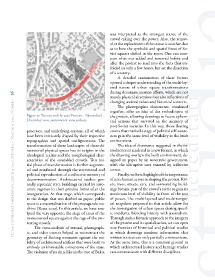
was interpreted as the strongest stance of the
                                                           crowd taking over the power. Also, the remov-
                                                           al or the replacement of the statue is another clue
                                                           as to how the symbolic and spatial focus of So-
                                                           viet squares shifted in the 1990s. One can com-
                                                           pare what was added and removed before and
                                                           after the protest to read into the facts that un-
                                                           folded in only a few hours, but set the direction
                                                           of a country.
                                                               A detailed examination of these factors
                                                           opened a deeper understanding of the multi-lay-
                                                           ered  nature  of  urban  square  transformations
        36                                                 during decommunisation efforts, which are not
                                                           merely physical alterations but also reflections of
                                                           changing societal values and historical contexts.
        studia universitatis hereditati, letnik 13 (2025), številka 1 / volume 13 (2025), number 1
                                                               The photographic documents, combined
                                                           together, offer an idea of the embodiment of
               Figure 10: Yerevan and the 2020 Protests – November/  the protest, allowing drawings to freeze ephem-
               December 2020, axonometric view, authors.   eral actions that survived in the memory of
                                                           post-Soviet societies. In this way, those fleeting
               processes, and underlying reasons, all of which   events that marked a stage of political self-aware-
               have been intricately shaped by their respective   ness gain the same level of visibility as the built
               topographies and spatial configurations. The   environment.
               transformation of these landscapes of three-di-  The idea of dissonance suggested in the in-
               mensional physical spaces has its origins in the   troduction is rendered in a new format, in which
               ideological realms and the morphological char-  the drawing overlaps the built environment, de-
               acteristics of the assembled crowds. This ini-  signed on paper by an autocratic government,
               tial phase of transformation is further augment-  with the disruptive uses enacted by collective
               ed and reinforced through the narrational and   unrest.
               political reproduction of a collective memory of   Finally, we have highlighted the importance
               decommunisation. Architectural studies gen-  of non-human actors in shaping the protest. Riv-
               erally represent state buildings erected by auto-  ers,  trees,  streets,  cars, and surrounding  build-
               cratic regimes in their pristine forms after the   ings became part of the crowd’s tactic to gain its
               inauguration. At that stage, which corresponds   maximum level of visibility in front of the seat
               to the design that was drafted on paper, public   of power. The multi-layered and multi-tempo-
               space is a materialisation of the propaganda ma-  ral snapshots proposed in this article allow for
               chine (Resta 2019). In this article, we have ana-  the investigation of urban spaces during specif-
               lysed the very opposite: the stage of crisis of the   ic incidents, blending history with journalism.
               monumental square against the rage of the pro-  Through such a forensic approach to the imagery
               testing crowds.                             of the protest and its spatialisation, we can open
                   The cross-analysis of textual, photograph-  new frontiers of historical and political studies
               ic, and video sources helped us reconstruct the   in which drawings combine information that
               geometry of fleeting moments against the sta-  written sources can only partially communicate.
               bility of architectural edifices that were built to   At the same time, this is a common ground in
               embody an immutable cornerstone of the state.   which architectural history and heritage studies
               The violation of its skin, like in the case of Baku,   can communicate with different disciplines.

