


Page 57 - Studia Universitatis Hereditati, vol 13(1) (2025)
P. 57
moment. The two men on the right, carrying the   ried.  This  secondary  medical interpretation  is
               corpse on a stretcher, are visibly affected by the   speculative and certainly not the primary angle
               situation. The first (on the right), who almost lit-  through which I am analysing the work. Never-
               erally walks out of the painting, has wide-open,   theless, it creates an interesting, if unintended,
               almost bulging eyes, and the man behind him is   parallel between the historical artistic depic-
               screaming in horror and crying in agony, which   tion and contemporary medical understanding.
               we can see through his open mouth. The figure’s   While I acknowledge that I may be projecting
               protruding eyes are also strikingly reminiscent   modern medical knowledge onto historical art,
               of exophthalmos, a medical condition charac-  the primary meaning remains the artist’s power-
               terised  by an  abnormal  protrusion  of  the eye-  ful depiction of plague terror, with any medical
               balls and usually associated with Graves’ disease   subtext only serving to enrich our appreciation
               – an autoimmune disorder affecting the thyroid   of how effectively the visual elements convey hu-
               gland. My main interpretation focuses on how   man suffering during historical epidemics.   57
               the depicted features effectively convey the psy-  The columnar sign with a pyramid roof and
                                                                 7
               chological horror of the plague and the traumat-  a niche , the only masonry object in the paint-
               ic burden of dealing with the dead. The bulging   ing, indicates that the painted scene is of local
               eyes and agonised facial expressions powerfully   significance and originates from Makole or its
               convey the overwhelming horror and suffering   surroundings, as Christian columnar signs of
               that prevails during epidemics. As a secondary   spiritual significance built in this way are often
               observation, the figure’s facial hair (a goat beard)   found along country roads and are particular-
               could possibly be a goitre (enlargement of the   ly common in alpine and pre-alpine areas. The   Sensory Representations of Plague
               thyroid gland), given the painter’s obvious ana-  presence of a columnar sign with a pyramid roof
               tomical inaccuracies elsewhere, such as the poor-  and a niche in the background and the religious
               ly executed right arm of the deceased being car-  symbolism above this painting suggest that re-


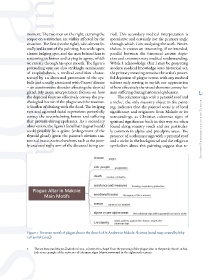
               Figure 3: The main motifs of plague altar in the church of St Andrew in Makole, Slovenia (mind map created by Moj-
               ca Ramšak (2025))


               7   The art historian Marjan Zadnikar (1964, 20) cites this chapel from the painting of the plague altar in the parish church in Ma-
                   kole as an example of the existence of columnar signs (slopno znamenje) in the eighteenth century

