


Page 54 - Studia Universitatis Hereditati, vol 13(1) (2025)
P. 54
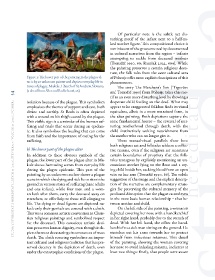
Of particular note is the subtle yet dis-
                                                           turbing motif of the infant next to a half-na-
                                                           ked mother figure. This compositional choice is
                                                           reminiscent of the gruesome reality documented
                                                           in cultural narratives from the region – infants
                                                           attempting to suckle from deceased mothers
                                                           (Tomažič 1990, 66; Ramšak 2022, 669). While
                                                           the painting preserves a certain religious deco-
                                                           rum, the folk tales from the same cultural area
               Figure 2: The lower part of the painting in the plague al-  of Pohorje offer more explicit descriptions of this
               tar is by an unknown painter and depicts everyday life in   phenomenon.
               times of plague. Makole, Church of St Andrew, Slovenia   The story The Merchant’s Son (‘Trgovčev
               (a detail from Šiles and Radšel 2018, 26).
        54                                                 sin’, Tomažič 1990) from Pohorje takes this mo-
                                                           tif to an even more disturbing level by showing a
        studia universitatis hereditati, letnik 13 (2025), številka 1 / volume 13 (2025), number 1
               isolation because of the plague. This symbolism   desperate child feeding on the dead. What may
               emphasises the themes of support and care, both   appear to be exaggerated folklore finds its visual
               divine and earthly. St Roch is often depicted   equivalent, albeit in a more restrained form, in
               with a wound on his thigh caused by the plague.   the altar painting. Both depictions capture the
               This visible sign is a reminder of the human suf-  same fundamental horror – the reversal of nur-
               fering and trials that occur during an epidem-  turing motherhood through death, with the
               ic. It also symbolises the healing that can come   child instinctively seeking nourishment from
               from faith and the importance of caring for the   the mother who can no longer give it.
               suffering.                                      These textual-visual parallels show how
                                                           both religious art and folktales address a collec-
               b) The lower part of the plague altar       tive trauma, even if the religious art maintains
               In addition to these obvious symbols of the   certain boundaries of propriety that the folk-
               plague, the lower part of the plague altar in Ma-  tales transgress by explicitly mentioning an un-
               kole shows harrowing scenes from everyday life   conscious mother lying on the floor and a cry-
               during  the plague epidemic.  This  part  of the   ing child beside her, sucking blood from an open
               painting by an unknown author shows a plague   vein on her arm (Tomažič 1990, 66). The subtle
               scene in which the dying and sick lie or sit on the   suggestion of the image and the explicit descrip-
               ground in various states of suffering (nine adults   tion of the narrative are complementary strate-
               and  one  infant),  while  four  men  and  a  wom-  gies for preserving the cultural memory of the
               an look after them, carry the deceased away on   profound disruption that the plague caused even
               stretchers, or offer help to those still clinging to   in the most basic human relationship – that be-
               life. The dying or dead figures are depicted na-  tween mother and child.
               ked; only their genitals are covered with a cloth.   On the left side of the painting, a woman is
               This was a common artistic convention in Chris-  depicted covering her nose with a handkerchief
               tian religious paintings and symbolised respect   in her right hand, probably due to the stench of
               for the deceased. This conscious artistic deci-  dead. With her left hand, she offers the hand-
               sion preserves human dignity, even though it de-  kerchief to a sick man sitting on the ground. He
               picts the most devastating circumstances of mass   stretches  out  his  arms  towards  her  to  protect
               death. The cloth covering symbolises an impor-  himself from infectious miasmas. This detail
               tant cultural and religious tradition that has pre-  of the painting, showing the woman covering
               served decency in the depiction of death, even   her nose to avoid inhaling miasma, indicates at
               under the catastrophic conditions of the plague.  least two things: firstly, that people were aware

