


Page 147 - Studia Universitatis Hereditati, vol 13(2) (2025)
P. 147
amples of thin-walled pottery and both smooth
                                                           and relief terra sigillata from the early Roman
                                                           period had already been found in Osor, and re-
                                                           cent surveys of the Osor channel have confirmed
                                                           this. Fragments of bowls, plates, cups, and jugs,
                                                           some bearing stamps and decorations, were col-
                                                           lected. Despite the unclear stratigraphy, this is
                                                           the first instance of such material culture being
                                                           found within a defined archaeological context,
                                                           and it represents the largest number of finds to
                                                           date from the Osor seabed and its surrounding
                                                           area (Blečić Kavur and Kavur 2024b).
                                                               In addition to these finds, two large wood-  147
                                                           en beams were discovered during the excava-
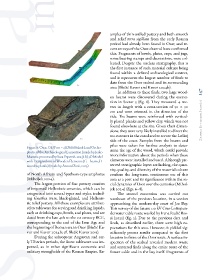
                                                           tion in Sector 3 (fig. 8). They measured 4 me-
                                                           tres in length with a cross-section of 30 × 30
                                                           cm and were oriented in the direction of the
                                                           tide. The beams were reinforced with vertical-
                                                           ly placed planks and yellow clay, which was not   Zrinka Ettinger Starčić
                                                           found elsewhere at the site. Given their dimen-
                                                           sions, they were very likely installed to direct the
                                                           sea currents in the canal and to secure the Lošinj
                                                           side of the coast. Samples from the beams and
                                                           piles were  taken for further analysis  to deter-
               Figure 8: Osor, Old Port – a) DEM Model and Ortho-
               photo of the Archaeological Excavation (made by Jerko   mine the age of the wood, which could provide
               Macura; processed by Sara Popović, 2023); b) 3D Model   more information about the periods when these
               with DesignatIons of Wooden Elements (G – beam; D –   elements were installed and used. Although pre-
               wooden planks) (made by Anton Divić, 2023)  served stratigraphic layers are lacking, the quan-
                                                           tity, quality, and diversity of the material culture
               of North African and Spatheon-type amphorae   confirm the long-term, continuous use of this
               (Miholjek 2024).                            area as a port and its significance within the so-
                   The largest portion of fine pottery consists   cial dynamics of Osor over the centuries (Mihol-
               of imported Hellenistic ceramics, which can be   jek 2024) (figs. 6–8).
               categorised into several types and styles, includ-  The second excavation was carried out
               ing  Gnathia  ware,  black-glazed,  and  Hellenis-  southeast of the previous location, in a section
               tic relief pottery. All these examples are attribut-  approaching the modern-day coast of Jaz Bay.
               ed to tableware for serving and drinking liquids,   This survey of the future 110 kV Cres-Lošinj un-
               such as drinking cups, bowls, and plates, and are   derwater cable route was led by Irena Radić Ros-
               dated from the late 4th to the 1st century BCE,   si (2023) (fig. 2). Due to the previous data and
               corresponding to the end of the Iron Age and   finds, as described earlier, there were high ex-
               the beginning of Roman era in Osor (Blečić Ka-  pectations for this area. However, it yielded sig-
               vur and Kavur 2024b; cf. Blečić Kavur 2015).  nificantly poorer results compared to the first
                   During the subsequent Augustan and ear-  location in front of the Osor strait. A surface in-
               ly Tiberian periods, the finest tableware was im-  spection of the seabed revealed modern waste
               ported, as in other significant economic and   and scattered finds along the entire route of the
               military strongholds of the Roman Empire. Ex-  future cable and in the bay itself. Fragments of

