


Page 145 - Studia Universitatis Hereditati, vol 13(2) (2025)
P. 145
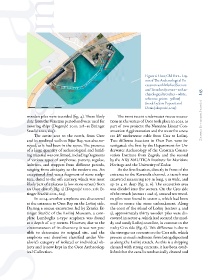
Figure 6: Osor, Old Port – Lay-
                                                                              out of The Archaeological Ex-
                                                                              cavation with Marked Sectors
                                                                              and Trenches (sectors – red; ar-
                                                                              chaeological trenches – white;   145
                                                                              reference points – yellow)
                                                                              (made by Sara Popović and
                                                                              Denis Jakopović, 2023)
               wooden piles were recorded (fig. 4). These likely   The most recent underwater rescue excava-
               date from the Venetian period and were used for   tions in the waters of Osor took place in 2023, as   Zrinka Ettinger Starčić
               mooring ships (Dugonjić 2010, 218–9; Ettinger   part of two projects: the Nerezine Linear Con-
               Starčić 2012, 625).                         struction Agglomeration and the route for a new
                   The entire area to the  north, from Osor   110 kV underwater cable from Cres to Lošinj.
               and its medieval walls to Bijar Bay, was also sur-  Two different locations in Osor Port were in-
               veyed, as it had been in the 1970s. The presence   vestigated: the first by the Department for Un-
               of a large quantity of archaeological and build-  derwater Archaeology of the Croatian Conser-
               ing material was confirmed, including fragments   vation  Institute  from Zagreb, and  the  second
               of various types of amphorae, pottery, tegulae,   by the ARS NAUTICA Institute for Maritime
               imbrices,  and  stoppers  from  different  periods,   Heritage and the University of Zadar.
               ranging from antiquity to the modern era. An    At the first location, directly in front of the
               exceptional find was a fragment of stone sculp-  entrance to the Kavanela channel, a trench was
               ture, dated to the 9th century, which was most   excavated measuring 107 m long, 3 m wide, and
               likely part of a pluteus (a low stone screen) from   up to 4 m deep (fig. 2; 6). The excavation area
               an Osor church (fig. 5) (Dugonjić 2010, 218; Et-  was divided into five sectors. On the Cres side
               tinger Starčić 2012, 625).                  of the trench (sectors 1 and 2), around ten wood-
                   In 2014, another amphora was discovered   en piles were found in sector 2, which had been
               at the entrance to Osor Bay on the Lošinj side.   used to secure the stone embankment. Along
               During a rescue excavation led by Zrinka Et-  the coast of the island of Lošinj (sectors 4 and
               tinger Starčić of the Lošinj Museum, a com-  5), approximately thirty wooden piles were dis-
               plete  Lamboglia  2-type  amphora  was  found   covered in sector 4, which had secured the mud-
               at a depth of 11.7 metres. However, due to the   dy and sandy Lošinj coastline, in contrast to the
               circumstances of its discovery, it was not pos-  rocky Cres side (fig. 6). This difference is due to
               sible to determine its original site, and the   the stronger sea currents on the Cres side, which
               amphora was therefore classified under Vrs-  prevent as much sediment from being deposited
               alović’s category of isolated or individual ob-  as along the Lošinj stretch. As this is a shipping
               jects and is now kept in the Osor Archaeolog-  channel with strong currents, it has been estab-
               ical Collection.                            lished that the canal is mechanically cleaned and

