


Page 73 - Studia Universitatis Hereditati, vol 13(2) (2025)
P. 73
73


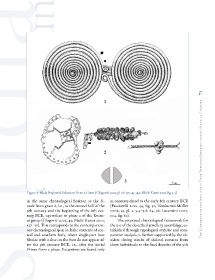
               Figure 7: Mala Prepoved, Selection From a Grave (Glogović 2003, pl. 26, 175; 45, 342; Blečić Kavur 2021, fig. 2, 5) The Emergence of the Iron Age in Osor Through Representative Material Culture
               in the same chronological horizon as the fe-  in contexts dated to the early 8th century BCE
               male from grave 6, i.e., in the second half of the   (Pacciarelli 2001, 54, fig. 30; Tamburini-Müller
               9th century and the beginning of the 8th cen-  2006, 39, pl. 2, 3.4–3.6; 64, 36; Lucentini 2007,
               tury BCE, equivalent to phase 2 of the Kvarn-  104, fig. 6c).
               er group (Glogović 2003, 45; Blečić Kavur 2010,   The proposed chronological framework for
               127–30). This corresponds to the contemporane-  the use of the described jewellery assemblage, es-
               ous chronological span in Italic contexts of cen-  tablished through typological-stylistic and com-
               tral and southern Italy, where single-part bow   parative analysis, is further supported by the ab-
               fibulae with a disc on the foot do not appear af-  solute dating results of skeletal remains from
               ter the 9th  century BCE, i.e., after  the initial   three individuals to the final decades of the 9th
               Primo Ferro 2 phase. Exceptions are found only

