


Page 75 - Studia Universitatis Hereditati, vol 13(2) (2025)
P. 75
75


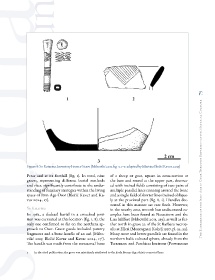
               Figure 8: Sv. Katarina, Inventory From a Grave (Mihovilić 2013, fig. 4, 1–3; adapted by Martina Blečić Kavur, 2025) The Emergence of the Iron Age in Osor Through Representative Material Culture

               Petar and at its foothill (fig. 1). In total, nine   of a sheep or goat, square in cross-section at
               graves, representing different burial methods   the base and round at the upper part, decorat-
               and rites, significantly contribute to the under-  ed with incised fields consisting of two pairs of
               standing of funerary strategies within the living   multiple parallel lines running around the bone
               space of Iron Age Osor (Blečić Kavur and Ka-  and a single field of shorter lines incised oblique-
               vur 2024, 17).                              ly at the proximal part (fig. 8, 1). Handles dec-
                                                           orated in this manner are rare finds. However,
               Sv. Katarina                                in the nearby area, smooth but undecorated ex-
               In 1962, a skeletal burial in a crouched posi-  amples have been found at Nesactium and the
               tion was excavated at this location (fig. 1; 8), the   Lim hillfort (Mihovilić 2013, 219), as well as fur-
               only one confirmed so far on the northern ap-  ther north in grave 22 of the St Barbara necrop-
               proach to Osor. Grave goods included pottery   olis at Elleri (Montagnari Kokelj 1997, pl. 25, 22).
               fragments and a bone handle of an awl (Miho-  Many more and better parallels are found in the
                                                       3
               vilić 2013; Blečić Kavur and Kavur 2024, 17 ).   northern Italic cultural sphere, already from the
               The handle was made from the metatarsal bone   Terramare and Peschiera horizons (Provenzano
               3   In the cited publication, the grave was mistakenly attributed to the Early Bronze Age; this is corrected here.

