


Page 102 - Studia Universitatis Hereditati, vol 13(1) (2025)
P. 102
associated with ‘the way in which Western so-
               cieties, since the sixteenth century, have incor-
               porated the full diversity of new plant products
               made available by the colonial experience’ (Sher-
               ratt 2007, 13).
                   Nonetheless,  in  Old  Europe,  other  sub-
               stances  with  psychoactive  properties  were  al-
               ready in circulation (Goodman 2007, 128–129),
               some of which are occasionally linked to the ar-
               chaeological identification of post-medieval clay
               pipes. In the Near East, the claims of smoking
               opiates or cannabis have been verified since the
        102    1990s, which vindicates ‘the 18th to 20th-centu-
               ry typological parallels and helps to refute the
               persistent opinions among some Israeli and oth-
        studia universitatis hereditati, letnik 13 (2025), številka 1 / volume 13 (2025), number 1
               er archaeologists that pipes were used to smoke
               narcotica [other than tobacco] at an earlier me-
               dieval date’ (Simpson 1994, 14, emphasis added).
                   This paper offers a preliminary exploration
               of how cannabis (Cannabis sp.) and opium (Pa-
               paver somniferum) were present, perceived, and
               discussed in post-medieval Portugal, roughly be-
               tween the sixteenth and nineteenth centuries.
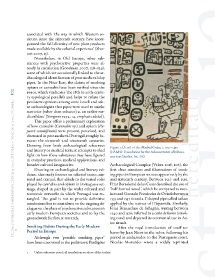
               Drawing from both archaeological references   Figure 1: Detail o f the Madrid Codex, c. 1250–1450
               and literary or medical texts, it attempts to shed   (FAMSI: Foundation for the Advancement of Mesoa-
               light on how these substances may have figured   merican Studies, Inc.: 86)
               in everyday practices, medical applications, and
               broader cultural imaginaries.               Archaeological Complex (Valera 2018, 106), the
                   Drawing on archaeological and literary evi-  first  clear  mentions  and  illustrations  of  smok-
               dence, this study focuses on selected traces, ma-  ing pipes in European sources appear only by the
               terial and textual, that allude to the varied roles   mid-sixteenth century. Between 1527 and 1561,
               played by cannabis and opium in Portuguese set-  Friar Bartolomé de las Casas described the use of
               tings, shaped in part by the wider cultural and   ‘half-burned wood’, which he compared to mus-
               economic networks in which Portugal was en-  kets and Gonzalo Fernández de Oviedo between
               tangled.  The goal  is  not to  provide definitive   1535 and 1557 noted a Y shaped pipe called tabaco
               conclusions but to contribute to the ongoing di-  applied by the natives of Hispaniola. Similarly,
               alogue on the place of psychoactive substances in   Friar Bernardino de Sahagún, writing between
               early modern European societies and to lay the   1540 and 1576, referred to a caña de humo (smok-
               groundwork for future research.             ing cane) and depicted its ceremonial use in Az-
                                                           tec rituals.
               Smoking Habits During the Early Modern          After the royal introduction of snuff to-
         f1    Period in Europe                            bacco by Jean Nicot in the 1560s, following his
                                                        1
                   Although two ‘possible smoking pipes’    period as ambassador to the Portuguese court,
               have been uncovered at the prehistoric Perdigões   Nicolás Monardes wrote a widely reprinted

               1   Unless otherwise noted, all translations are those of the author.

