


Page 103 - Studia Universitatis Hereditati, vol 13(1) (2025)
P. 103
and translated treatise on medicinal substanc-
               es from the West Indies. In the English trans-
               lation, among the medical properties of various
               plants, it is suggested that the smoke of tobac-
               co (Nicotiana tabacum) be taken ‘at your mouth
               through a tube or cane’ (Monardes 1580, fol.
               44v).
                   In many Portuguese and Mediterranean
               urban contexts, it is generally believed that to-
               bacco, initially regarded as an ornamental plant,
               was first consumed by hand-rolled cigarettes,
               chewed, or snuffed through the nose. Clay smok-
               ing pipes began to appear more consistently only                                            103
               in the early seventeenth century and became
               common archaeological finds throughout the
               eighteenth century. In Portugal, particularly in
               the Lisbon region, a large number of Dutch and
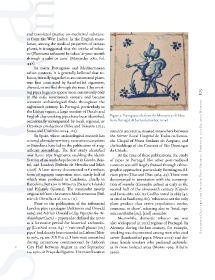
               English clay smoking pipes have been identified,   Figure 2: Portuguese tile from the Monastery of Odive-
               occasionally accompanied by local, regional, or   las in Portugal, 18th century (author, 2024)
               Ottoman productions (Silva and Teixeira 2022;
               Sousa and Casimiro 2024, 123).              remains uncertain, situated somewhere between
                   In Spain, where archaeological research has   the former Royal Hospital de Todos-os-Santos,
               covered a broader territory, extensive excavations   the Chapel of Nossa Senhora do Amparo, and
               in Barcelona have led to the publication of a sig-  the buildings of the Convent of São Domingos
               nificant  assemblage.  The  first  study  identified   da Cidade.
               over 8,000 pipe fragments, enabling the identi-  At the time of these publications, the study
               fication of 96 workshops located in Gouda, Bris-  of pipes in Portugal like other post-medieval
               tol, and London (Beltrán de Heredia and Miró   contexts was still largely framed through ethno- Exploring Cannabis and Opium in Post-Medieval Portugal and Related Nations
               2008). A later survey documented 128 artefacts   graphic approaches, particularly focusing on Af-
               from 28 separate excavation sites, nearly half of   rican pipes (Dias and Dias 1964, 49). These were
               which were produced in Catalonia, chiefly in   documented in association with the consump-
               Barcelona, but also in Minorca (Balearic Islands)   tion of riamba (Cannabis sativa) as early as the
               and Palamós (Girona). The remainder mostly   second half of the nineteenth century (Capelo
               originated from the eastern Mediterranean (Bel-  and Ivens 1881, 26). As Coelho noted in 1889 (41,
               trán de Heredia et al. 2012, 111).          as cited in Saad 2019, 80), ‘tobacco is not the only
                   Prior to the publication of the influential   plant product that entire populations smoke,
               London pipe typologies (Atkinson and Oswald   consume, or chew’, referring also to ‘betel, opi-
               1969) and Adrian Oswald’s Clay Pipes for the Ar-  um, naschiche [sic], [and] cannabis.
               chaeologist (1975) – papers that defined the 1970s   Meanwhile, domestic tobacco use was
               as a formative period for historical archaeolo-  also widespread in rural regions of Portugal. In
               gy (Cessford 2001, 84) – ‘two small plaster [sic]   Alentejo during the last century, for example,
               pipes’ had already been recorded in Lisbon (Moi-  smoking was documented among men who used
               ta 1965, 75, est. XXV-212). These were unearthed   careto (handcrafted pipes; Neves 2003) and dis-
               during  excavations commissioned  by Lisbon’s   creet female smokers who preferred  cachimbe-
         f2    City Hall between August 22 and September   ta in more isolated areas (Moniz 1963; Ribeiro
               24, 1960, at Praça da Figueira. The exact location   1969).

