


Page 122 - Studia Universitatis Hereditati, vol 13(2) (2025)
P. 122
Introduction                                er three independent Roman towns actually ex-
               The framework that holds together our knowl-  isted (today´s Beli, Cres and Osor), but also their
               edge of the Roman history of the Cres-Lošinj ar-  exact locations, given that some researchers have
               chipelago is about 250 years old. It was created   equated the Roman town of Crexi with mod-
               at a time when the first interest in antiquity was   ern-day Cres, while others believed it was locat-
               awakened and reflected in travelogues. For Cres   ed in the modern village of Beli (e.g. Margetić
               and Lošinj, the travel report of Alberto Fortis   1984, 245–7; Wilkes 1969, 196; Alföldy 1965, 73).
               (1771) reflects this period. It is not only the old-  However, there is general agreement that Roman
               est publication of its kind, but also the first to   towns were founded only on the island of Cres,
               include archaeological information. It lists ep-  but not on the neighbouring island of Lošinj.
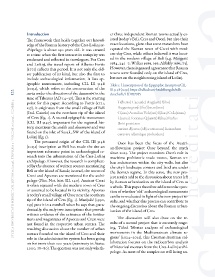
               igraphic monuments, including CIL III 3148   Table 1: Transcription of the Epigraphic Inscription CIL
               (10131), which refers to the construction of the   III 3148 (10131). https://edh.ub.uni-heidelberg.de/edh
        122    curia under the direction of the duumviri in the   /inschrift/HD057945

               time of Tiberius (AD 14–37). This is the starting
        studia universitatis hereditati, letnik 13 (2025), številka 2 / volume 13 (2025), number 2
               point for this paper. According to Fortis (1771,   Ti(berio) Caesar[e] Aug(usti) f(ilio)
               137), it originates from the small village of Beli   Augusto pon[t(ifici)] max(imo)
               (Ital. Caisole) on the northern tip of the island   C(aius) Aemilius Vols(oni) f(ilius) Ocla(tinus)
               of Cres (fig. 1). A second epigraphic monument   L(ucius) Fonteius Q(uinti) f(ilius) Rufus
               (CIL III 3147), important for the regional his-  IIviri porticum
               tory, mentions the aedile and duumviri and was   curiam d(ecreto) d(ecurionum) faciundum
               found on the islet of Susak, SW of the island of   curavere id(em)que probav[ere]
               Lošinj (fig. 1).
                   The presumed origin  of the CIL III 3148    Osor has been the focus of the Austri-
               (10131) inscription at Beli has made the site an   an-Slovenian project Osor beyond the myth
               important reference point in archaeological re-  since 2023. The project examines Osor’s role in
               search into the urbanisation of the Cres-Lošinj   maritime prehistoric trade routes, Roman ur-
               archipelago. However, the research is complicat-  ban architecture within the city walls, but also
               ed by the absence of written sources mentioning   the city’s landscape context and land use under
               Beli or the island of Susak; instead, the towns of   the Roman regime. In this sense, the new pro-
               Crexi and Apsorus are mentioned for the archi-  ject results add to the discussion about traces left
               pelago (Plin. Nat. hist. III, 140). Ancient Crexi   by Roman urbanisation on the island of Cres as
               is often equated with the modern town of Cres   a whole. This paper therefore addresses the ques-
               or assumed to be located in its vicinity. Apsorus   tion of whether ‘old’ archaeological monuments
               is today’s small village of Osor near the southern   can be re-evaluated in light of the new project re-
               tip of the island of Cres (fig. 1). Matijašić (1990,   sults, and whether this process can contribute to
               259) puts it in a nutshell when he says that, para-  the ongoing discussion about the Roman urban-
               doxically, the only two inscriptions that provide   isation of the island of Cres.
               written evidence of the existence of the institu-
               tions and magistrates of Apsorus and Crexi were   The discussion will also draw on the re-
               not found in the respective urban centres. The   sults of a second project that is currently ongo-
               resulting discussion about the number of urban   ing. Titled ‘Mortar analyses of archaeological
               centres founded on the island of Cres and their   monuments in the Mediterranean climate re-
               role in the administrative system has been going   gions’ (2024–2025), this Croatian-Austrian col-
               on for more than 100 years (summary in Starac   laboration focuses on the radiocarbon analysis
               2000, 78–80). The question was not only wheth-  of historical mortars from the Cres-Lošinj archi-
                                                           pelago. As most of the samples are still being an-

