


Page 127 - Studia Universitatis Hereditati, vol 13(2) (2025)
P. 127
tained may be unclear, they can provide a means


                                                                                                           127


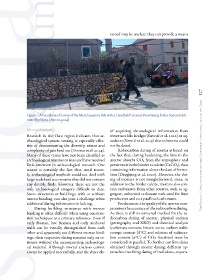
               Figure 5: A Geophysical Survey of the Main Square in Beli with a Handheld Ground-Penetrating Radar System (elab-
               orated by Nives Doneus, 2024)

               Mortar Analysis                             of acquiring chronological information from
               Research in the Osor region indicates that ar-  structures like bridges (Sironić et al. 2022) or aq-
               chaeological remote sensing is especially effec-  ueducts (Sironić et al. 2019) that otherwise could
               tive at demonstrating the diversity, extent and   not be dated.
               complexity of past land use (Doneus et al. 2024).   Radiocarbon dating of mortar is based on
               Many of these traces have not been classified as   the fact that, during hardening, the lime in the  The Roman Urbanisation of the Northern Adriatic Island of Cres
               archaeological remains or sites and have received   mortar absorbs CO₂ from the atmosphere and
               little attention in archaeological research. One   preserves it in the binder as calcite (CaCO₃), thus
               reason is certainly the fact that, until recent-  containing information about the date of forma-
               ly, archaeological methods could not deal with   tion (Daugbjerg et al. 2020). However, the dat-
               large-scale land use remains that did not contain   ing of mortars is not straightforward, since, in
               any datable finds. However, these are not the   addition to the binder calcite, mortars also con-
               only  archaeological  category  difficult  to  date.   tain carbonates from other sources, such as ag-
               Stone structures or buildings, with or without   gregate, unburned carbonate rock used for lime
               mortar binding, can also pose a challenge when   production and recrystallised carbonates.
               additional dating information is lacking.       Furthermore, the quality of the mortar com-
                   Dating building structures with mortar   promises the accuracy of the radiocarbon dating.
               binding is often difficult when using construc-  As there is still no universal method for the ra-
               tion techniques as a primary reference. Even if   diocarbon dating of mortar, physical analysis
               early  Roman,  late Roman  and early  medieval   (petrography and XRD) and chemical analysis
               walls can be visually distinguished from each   (carbonate content, kinetic curve, carbon stable
               other and apparently use different mortar bind-  isotope content (δ C) and relation of radiocar-
                                                                           13
               ings, their respective dating remains only an es-  bon content (a C) of CO2 fractions) must be
                                                                        14
               timate without the accompanying archaeologi-  considered in parallel. To further confirm dates
               cal material. Although mortar analyses cannot   obtained through mortar dating, different ap-
               always be applied successfully, and the dates ob-  proaches involving dating of inclusions, sequen-

