


Page 126 - Studia Universitatis Hereditati, vol 13(2) (2025)
P. 126
126


        studia universitatis hereditati, letnik 13 (2025), številka 2 / volume 13 (2025), number 2


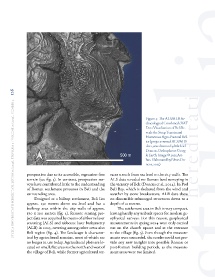
                                                                              Figure 4: The ALS/ALB Ar-
                                                                              chaeological Combined cVAT
                                                                              Data Visualisation of Beli Re-
                                                                              veals the Steep Terrain and
                                                                              Numerous Agro-Pastoral Rel-
                                                                              ics (project-owned ALS/ALB
                                                                              data, visualisation by Michael
                                                                              Doneus, Orthophoto: Goog-
                                                                              le Earth. Image © 2025 Air-
                                                                              bus. Elaborated by Nives Do-
                                                                              neus, 2025)


               prospection due to its accessible, vegetation-free   races stretch from sea level to the city walls. The
               terrain (see fig. 3). In contrast, prospection sur-  ALS data revealed no Roman land surveying in
               veys have contributed little to the understanding   the vicinity of Beli (Doneus et al. 2024). In Pod
               of Roman settlement processes in Beli and the   Beli Bay, which is sheltered from the wind and
               surrounding area.                           weather by stone breakwaters, ALB data show
                   Designed as a hilltop settlement, Beli lies   no discernible submerged structures down to a
               approx. 130 metres above sea level and has a   depth of 10 metres.
               built-up area within the city walls of approx.   The settlement area in Beli is very compact,
               170  x  100  metres (fig.  2).  Remote  sensing  pro-  leaving hardly any unbuilt spaces for modern ge-
               ject data was acquired by means of airborne laser   ophysical surveys. For this reason, geophysical
               scanning (ALS) and airborne laser bathymetry   measurements in spring 2024 were only carried
               (ALB) in 2023, covering among other areas also   out on the church square and at the entrance
               Beli region (fig. 4). The landscape is character-  to the village (fig. 5). Even though the measure-
               ised by agricultural remains, most of which are   ments were successful, the results could not pro-
               no longer in use today. Agricultural plots are lo-  vide any new insights into possible Roman or
               cated on small, flat areas to the north and west of   post-Roman building periods, as the measure-
               the village of Beli, while former agricultural ter-  ment areas were too limited.

