


Page 141 - Studia Universitatis Hereditati, vol 13(2) (2025)
P. 141
141


                                                                                                           Zrinka Ettinger Starčić


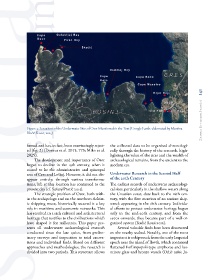
               Figure 2: Locations of the Underwater Sites of Osor Mentioned in the Text (Google Earth; elaborated by Martina
               Blečić Kavur, 2025)


               firmed and has, in fact, been convincingly reject-  the collected data to be organised chronologi-
               ed (fig. 2) (Doneus et al. 2015, 773; Miko et al.   cally through the history of the research, high-
               2025).                                      lighting the value of the sites and the wealth of
                   The development and importance of Osor   archaeological remains, from the ancient to the
               began to decline in the 15th century, when it   modern era.
               ceased to be the administrative and episcopal
               seat of Cres and Lošinj. However, it did not dis-  Underwater Research in the Second Half
               appear entirely; through various transforma-  of the 20th Century
               tions, life at this location has continued to the   The earliest records of underwater archaeologi-
               present day (cf. Sušanj Protić 2015).       cal sites, particularly in the shallow waters along
                   The strategic position of Osor, both with-  the Croatian coast, date back to the 16th cen-
               in the archipelago and on the northern Adriat-  tury, with the first mention of an ancient ship-
               ic shipping route, historically secured it a key   wreck appearing in the 18th century. Individu-
               role in maritime and economic networks. This   al efforts to protect underwater heritage began
               has resulted in a rich cultural and architectural   only  in the mid-20th century,  and from  the
               heritage that testifies to the civilisations which   1970s onwards, they became part of a well-or-
               have shaped it for millennia. This paper pre-  ganised system (Radić Rossi 2012).
               sents  all  underwater  archaeological  research   Several valuable finds have been discovered
               conducted since the late 1960s, from prelim-  on the nearby seabed. Notably, one of the most
               inary surveys and inspection to trial excava-  important is a shipwreck from the early Imperial
               tions and individual finds. Based on different   epoch near the island of Ilovik, which contained
               approaches and methodologies, the research is   flattened Forlimpopoli-type amphorae and lux-
               divided into two periods. This structure allows   urious glass and bronze vessels (Orlić 1986; Ju-

