


Page 98 - Studia Universitatis Hereditati, vol 13(2) (2025)
P. 98
98

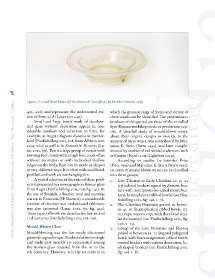
               Figure 5: Footed Bowl Made of Decolourised Glass (photo by Monika Petrović, 2025)
        studia universitatis hereditati, letnik 13 (2025), številka 2 / volume 13 (2025), number 2
               425,  426)  and  represents  the  undecorated  ver-  which the greatest range of forms and variety of
               sion of form 2.1.8 (Lazar 2003, 43).        these vessels can be identified. The predominant
                   Small and large bowls made of decolour-  products of this period are those of the so-called
               ised glass without decoration appear in con-  Syro-Roman workshop circle or production cen-
               siderable numbers and variations in form, for   tres. A detailed study of mould-blown wares,
               example, at Augst (Augusta Raurica in Switzer-  about their origins, designs or moulds, to the
               land (Fünfschilling 2015, 108, form AR16.2; nos.   masters of these wares, was contributed by Mar-
               5254–260) as well as in Romula in Slovenia (La-  ianne E. Stern (Stern 1995), and later comple-
               zar 2025, 69). This is a large group of vessels with   mented by studies of individual craftsmen, such
               low ring foot, rarely with a high foot, most often   as Ennion (Israeli 2011; Lightfoot 2014).
               without decoration or with individual shallow   According  to  studies  by  Jennifer Price
               ridges on the body. Rim can be made or shaped   (Price 1991) and Marianne E. Stern (Stern 1995),
               in very different ways. It is often wide and flared,   1st-century mould-blown wares can be classified
               profiled, and with an overhanging rim.      into three groups:
                   A varied selection of the rims of these prod-  1.   Late Tiberian to Early Claudian, i.e. 35–45
               ucts is presented in a monograph on Roman glass   (cylindrical beakers signed by Ennion, bea-
               from Augst (Fünfschilling 2015, 108, fig. 141). At   kers with inscriptions (so-called motto bea-
               the site of Romula, a Roman road and customs    kers), hemispherical ribbed bowls) (see Fün-
               station in Pannonia (SE Slovenia), a considerable   fschilling 2015, fig. 146, 1–7).
               amount of decolourised undecorated tableware   2.  The Claudian-Neronian period or betwe-
               was also excavated (Lazar 2025, 69, fig. 42a).   en 45–61 (hemispherical ribbed bowls, cir-
               These types of bowls are dated to the late 1st and   cus cups, various cups with floral and simi-
               2nd centuries (Fünfschilling 2015, 278–79).     lar decoration) (see Fünfschilling 2015, fig.
                                                               146, 9–13).
               Mould-Blown Glass                           3.   Group of the Late Neronian and Flavian
               Mould-blowing was the last newly discovered     period or between 61–75 (jug and polygonal
               glassmaking technique. Products blown in single   bottle with Ennion signature, ribbed bowls,
               and multi-part moulds are represented among     conical beakers with various decoration, he-
               the Roman glass material from the 1st to the    ad-shaped bottles) (see Fünfschilling 2015,
               5th centuries. However, it is the 1st century in   fig. 148, 1–8).

