


Page 100 - Studia Universitatis Hereditati, vol 13(2) (2025)
P. 100
100


        studia universitatis hereditati, letnik 13 (2025), številka 2 / volume 13 (2025), number 2


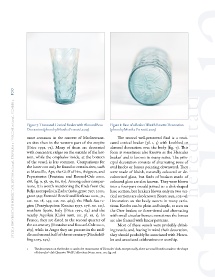
               Figure 7: Truncated Conical Beaker with Almond Boss   Figure 8: Base of a Beaker Wwith Rosette Decoration
               Decoration (photo by Monika Petrović, 2025)  (photo by Monika Petrović, 2025)
               more  common  in  the context  of  Mediterrane-  The second well-preserved find is a trun-
               an sites than in the western part of the empire   cated conical beaker (pl. 1, 5) with knobbed or
               (Price 1991, 72). Many of them are decorated   almond decoration over the body (fig. 7). This
               with concentric ridges on the outside of the bot-  form is sometimes also known as the Hercules
                                                                 1
               tom, while the omphalos inside, at the bottom   beaker  and is known in many series. The prin-
               of the vessel, is less common. Comparisons for   cipal decoration consists of alternating rows of
               the latter can only be found at certain sites, such   oval knobs or bosses pointing downward. They
               as Marseille, Apt, the Gulf of Fos, Avignon, and   were made of bluish, naturally coloured or de-
               Peyrestortes (Fontaine and Roussel-Ode 2010,   colourised glass, but finds of beakers made of
               188, fig. 9, 58, 59, 60, 67). Among other compar-  coloured glass are also known. They were blown
               isons, it is worth mentioning the finds from the   into a four-part mould joined to a disk-shaped
               Relja necropolis in Zadar (1989, grave 797; 2005,   base section, but beakers blown only in two ver-
               grave 329; Eterović Borzić and Štefanac 2021, 32,   tical sections are also known (Stern 1995, 103–4).
               cat. no. 18, 149, cat. no. 469), the Black Sea re-  Decoration on the body occurs in many varia-
               gion (Pontykapeion; Kunina 1997, 276, no. 121),   tions. Knobs can be plain and simple, as seen on
               southern Spain,  Italy (Price 1991, 64) and  the   the Osor beaker, or three-tiered and alternating
               nearby Aquileia (Calvi 1968, 101, pl. 16, 1). In   with small circular bosses; sometimes the bosses
               France, they are dated to the second quarter of   are also framed with linear patterns.
               the 1st century (Fontaine and Roussel-Ode 2010,   Most of these vessels were probably drink-
               189), while in Augst they are present in the mid-  ing vessels, and, having in mind their decoration,
               dle and second half of the 1st century (Fünfschil-  they should probably be associated with Hercu-
               ling 2015, 292).                            les and associated celebrations or worship.

               1   The decoration on the beaker is said to be reminiscent of Hercules’ club; exceptionally, there are small bottles made in the shape
                   of Hercules’ club (Ernesto Wolf Collection; Stern 1995, 105, fig. 70)

