


Page 101 - Studia Universitatis Hereditati, vol 13(2) (2025)
P. 101
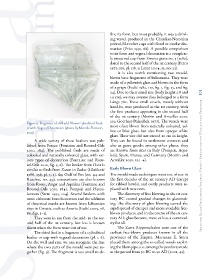
fine its form, but most probably, it was a drink-
                                                           ing vessel, produced in the Claudian-Neronian
                                                           period, like other cups with floral or similar dec-
                                                           oration (Price 1991, 68). A possible comparison
                                                           to its form and vegetal decoration is a complete-
                                                           ly preserved cup from Emona grave no. 5 (1280),
                                                           dated to the second half of the 1st century (Petru
                                                           1972, 116, pl. 118, 3; Lazar 2004, 55, no. 23).
                                                               It is also worth mentioning two mould-
                                                           blown base fragments of balsamaria. They were
                                                           made of a yellowish glass and blown in the form
                                                           of a grape (Fadić 1982, 117, fig. 1, fig. 33, and fig.
                                                           34). Due to their small size (body height 2.8 and   101
                                                           1.5 cm), we may assume they belonged to a form
                                                           Isings 78e. These small vessels, mostly without
                                                           handles, were produced in the 1st century, with
                                                           the first products appearing in the second half
                                                           of the 1st century (Moirin and Arveiller 2010,
                                                           215; Goethert-Polaschek 1977). The vessels were
               Figure 9: Fragment of a Mould-Blown Cylindrical Beak-
               er with Vegetal Decoration (photo by Monika Petrović,   most often blown from naturally coloured, yel-
               2025)                                       low or blue glass, but also from opaque white
                                                           glass. Their size did not exceed 10 cm in height.
                   A wide variety of these beakers was pub-  They can be found in settlement contexts and
               lished from France (Fontaine and Roussel-Ode   also  as grave goods; among  other places,  they
               2010, 184). The published finds are made of   are known from sites in Italy (Pompeii, Aqui-
               coloured and naturally coloured glass, with var-  leia), Spain, France, and Germany (Moirin and
               ious types of decoration (Fontaine and Rous-  Arveiller 2010, 221–4).
               sel-Ode 2010, fig. 5, 6). The beaker from Osor is                                           Selected Glass Finds from Apsorus (Osor) – Reflection of Wealth and Prestige
               similar to finds from Zaton in Zadar (Gluščević   Early Blown Glass
               1986, 256, pl. 1, 2), the Gulf of Fos (no. 44 and   The mould-made techniques went out of use in
               Ruscino, no. 49), comparisons are also known   the first decades of the 1st century AD (except
               from Rome, Augst and Aquileia (Fontaine and   for ribbed bowls), and costly products were re-
               Roussel-Ode 2010, 184), Pompeii and Hercu-  placed with new ones.
               laneum (Stern 1995, 104). Several beakers with   The discovery of free blowing in the 1st cen-
               more elaborate boss decoration and the addition   tury BC caused gradual changes in glassmak-
               of theatrical masks are known from Liburnian   ing. The discovery of glass blowing caused the
               sites in Croatia, such as Asseria (Fadić 2005, 78,   rapid spread of cheaper and more available free-
               86, figs. 1–3).                             blown products, and in the course of the 1st cen-
                   They were in use from the mid- to the sec-  tury AD, glass became, more or less, a commod-
               ond half of the 1st century, but less is known   ity for all.
               about when the form went out of use.            The Zarte Rippenschalen were one of the
                   The third find is a fragment of a cylindrical   earliest  free-blown products known in  all  the
               beaker or cup with vegetal decoration (pl. 1, 6).   provinces of the Empire. Marianne E. Stern
               On the wall and rim, we can recognise the line   placed them among the so-called vessels explor-
               where the two parts of the mould were put to-  ing the blow-pipe, i. e., among the products made
               gether (fig. 9). The fragment is too small to de-  in the period from 30 BC to 50 AD (2001, 43).

