


Page 111 - Studia Universitatis Hereditati, vol 13(2) (2025)
P. 111
111


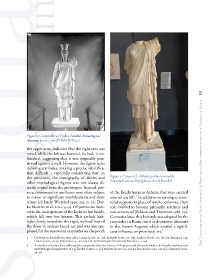
               Figure 2: Caryatid from Tralles, Istanbul Archaeological
               Museum, inv. no. 1189 (D-DAI-IST-671)
               the upper arms indicates that the right arm was
               raised while the left was lowered. Its back is un-
               finished, suggesting that it was originally posi-
               tioned against a wall. However, the figure lacks
               defining attributes, making a precise identifica-
               tion difficult – especially considering that, in                                            The Caryatid from Osor (Apsorus): A Provincial Reinterpretation of a Classical Motif
               the provinces, the iconography of deities and   Figure 3: Caryatid, Le Musée public national de
               other mythological figures was not always di-  Cherchell, inv. no. S 89 (photo: Amel Bouder)
               rectly copied from the prototypes. Instead, pos-
               ture, movement, or attributes were often subject   of the Erechtheion in Athens, that were erected
                                                                         5
               to minor or significant modifications and devi-  around 415 BC.  In addition to serving as struc-
               ations (cf. lately Witschel 1995, 251, n. 22; Dor-  tural supports in place of simpler columns, their
               ka Moreno et al. 2021, 5–9). Of particular inter-  role evolved to become primarily aesthetic and
               est is the arrangement of the locks in her braids,   non-structural (Polacco and Traversari 1988, 20).
               which fall over her breasts. This archaic hair-  Centuries later, this hairstyle was adopted by the
               style closely resembles the rigid, stylized hair of   caryatides in Rome, used as decorative elements
               the korai in archaic Greek art and was also em-  in the Forum Augusti, which exerted a signifi-
               ployed for the renowned caryatides on the porch   cant influence on provincial art. 6

               5   On korai in Erechtheion inter alios: Lauter (1976, 12–40), Schmidt (1982, 79–84), Jenkins (2006, 125–8). On dating see esp.
                   Lauter (1976, 16–7), Vickers (2014, 123–31). On their hairstyle: Schwab and Rose (2015, 1–4).
               6   A number of studies have addressed the caryatides from the Forum of Augustus and their role within the broader architectural
                   and ideological programme: cf. e.g. Zanker (1968, 11–3), Hölscher (2007, 119–20), La Rocca (2011, 993–1010), Lo Monaco (2021,
                   34–6).

