


Page 27 - Studia Universitatis Hereditati, vol 13(2) (2025)
P. 27
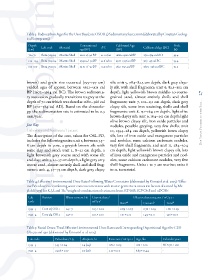
Table 3: Radiocarbon Ages for the Osor Bay (core OSOR 2) Sedimentary Succession (elaborated by Croatian Geolog-
               ical Survey, 2025)
                Depth   Lab.code  Material  Conventional   d C  Calibrated Age  Calibrated Age (BC)  Prob.
                                                       13
                (cm)                       age (BP)            (BP)                          (%)
                70–71  Beta-703103  Marine Shell  2210 +/- 30 BP  +1.1 o/oo  1680–1366 cal BP  270–584 cal AD  95.4
                122–124  Beta-703104 Marine Shell  2740 +/- 30 BP  +1.6 o/oo  2318–1996 cal BP  369–47 cal BC  95.4
                195–197  Beta-703105  Marine Shell  5410 +/- 30 BP  +2.5 o/oo  5621–5313 cal BP  3672–3364 cal BC  95.4


               brown) and grain size occurred (195–197 cm)   silt; unit 5, 78.5–82.5 cm depth, dark grey claye-
               yielded ages of approx. between 5621–5313 cal   ly silt, with shell fragments; unit 6, 82.5–102 cm
               BP (3672–3364 cal BC). The brown sedimenta-  depth, light yellowish brown middle- to coarse-  27
               ry succession gradually transitions to grey at the   grained sand, almost entirely shells and shell
               depth of 70 cm which was dated at 1680–366 cal   fragments; unit 7, 102–151 cm depth, dark grey
               BP (270–584 cal AD). Based on the chronolo-  clayey silt, some iron straining, shells and shell
               gy, the sedimentation rate is estimated to be 0.3   fragments; unit 8, 151–164 cm depth, light olive
               mm/year.                                    brown clayey silt; unit 9, 164–251 cm depth light
                                                           olive brown clayey silt, iron oxide particles and   Dip Your Finger in the Sea...
               Jaz Bay                                     nodules, possible greying, very few shells; unit
               Lithology and Sediment Texture              10, 235.5–284 cm depth, yellowish bown clayey
               The description of the core, taken for OSL-PD,   silt, lots of iron oxide and manganese particles
               includes the following units: unit 1, between 3.5–  and nodules, some calcium carbonate nodules,
               8 cm depth in core, a greyish brown silt with   very few shell fragments; and unit 11, 284–304
               some clay and sand; unit 2, 8–21 cm depth, a   cm depth, light yellowish brown clayey silt, lots
               light brownish grey coarse sand with some silt   of iron oxide and manganese particles and nod-
               and clay; unit 3, 21–37 cm depth, a light grey very   ules, some calcium carbonate nodules, very few
               coarse sand, almost entirely shell and shell frag-  shell fragments. Units 1 to 7 are marine; units 8
               ments; unit 4, 37–75 cm depth, dark grey clayey   to 11, terrestrial.


               Table 4: Effective Environmental Dose Rates Following Water Correction (elaborated by Kinnaird et al. 2025).  Effec-
                                                                                               a
               tive Beta dose rate combining water content corrections with inverse grain size attenuation factors obtained by Me-
               jdahl (1979) for K, U, and Th;  weighted combination of estimates from ICP-MS, ICP-OES and uDOSE
                                    b
                Lab    Position     Water content / %  Cosmic dose /   Effective dose rates, wet / mGy a-1
                code                              mGy a -1
                                                                Beta a,b     Gamma b     Total b
                1529_5  Core 2/5 OSL1  24 ± 7     0.15 ± 0.02   0.89 ± 0.07  0.76 ± 0.05  1.80 ± 0.09
                1530_4  Core 3/4 OSL2  24 ± 7     0.15 ± 0.01   1.71 ± 0.13  1.49 ± 0.11  3.36 ± 0.17


               Table 5: Burial Doses, Total Effective Environmental Dose Rates and Corresponding Depositional Ages for CER-
               SA1529 and 1530 (elaborated by Kinnaird et al. 2025)
                Lab code      Paleodose / Gy  Aliquots / n  Dose rate / mGy a-1 Age /ka  Calender years
                1529_5        3.35 ± 0.04   24 (24)        1.80 ± 0.09   1.86 ± 0.10   AD 170 ± 100
                1530_4        23.08 ± 0.17  20 (20)        3.35 ± 0.17   6.89 ± 0.44   -

