


Page 26 - Studia Universitatis Hereditati, vol 13(2) (2025)
P. 26
26

        studia universitatis hereditati, letnik 13 (2025), številka 2 / volume 13 (2025), number 2


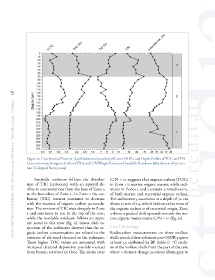
               Figure 10: Geochemical Zones (1–3) and Subzones (21 and 22) of Core OSOR 2 and Depth Profiles of TOC and TN
               Concentrations, Inorganic Carbon (TIC) and C/N Weight Ratios and Insoluble Residuum (%) (elaborated by Croa-
               tian Geological Survey, 2025)


                   Insoluble residuum follows the distribu-  C/N < 10 suggests that organic carbon (TOC)
               tion of TIC (carbonate) with an upward de-  in Zone 1 is marine organic matter, while sedi-
               cline in concentrations from the base of Zone 3   ments in Zones 2 and 3 contain a mixed source
               to the boundary of Zone 2. In Zone 2 the car-  of both marine and terrestrial organic carbon.
               bonate (TIC) content continues to decrease   The sedimentary succession at a depth of 70 cm
               with the increase of organic carbon accumula-  shows a ratio of 24, which indicates that most of
               tion. The amount of TIC rises abruptly in Zone   the organic carbon is of terrestrial origin. Zone
               3 and continues to rise to the top of the core,   3 shows a gradual shift upwards towards the ma-
               while the insoluble residuum follows an oppo-  rine organic matter source C/N < 10 (fig. 10)
               site  trend in  this zone  (fig. 9). Smear  slide in-
               spection of the sediments showed that the or-  Core Chronology
               ganic carbon concentrations are related to the   Radiocarbon measurements on three mollusc
               contents of silt-sized charcoal in the sediment.   shells revealed that sediment core OSOR 2 spans
                                                                                            14
               These higher TOC values are associated with   at least 5.5 calibrated ka BP (table 1).  C analy-
               increased charcoal deposition possibly sourced   sis of the mollusc shells from the part of the core
               from human activities in Osor. The molar ratio   where a distinct change in colour (from grey to

