


Page 22 - Studia Universitatis Hereditati, vol 13(2) (2025)
P. 22
22

        studia universitatis hereditati, letnik 13 (2025), številka 2 / volume 13 (2025), number 2

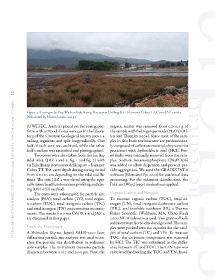
               Figure 7: Coring in Jaz Bay With an Eijkelkamp Percussion Drilling Set – Hammer Cobra TT, Cores JAZ 1 and 2
               (elaborated by Nives Doneus, 2024)

               (UWITEC, Austria) placed on the coring plat-  organic matter was removed from 0.1–0.2 g of
               form with a tripod. Cores were cut in the labora-  the sample with hydrogen peroxide (H2O2) (Al-
               tory of the Croatian Geological Survey into 1.4   len and Thornley 2004). Since most of the sam-
               m-long segments and split longitudinally. One   ples in this karst environment are predominant-
               half of each core was archived, while the other   ly composed of carbonate material, they were not
               half’s surface was smoothed and photographed.   pretreated with hydrochloric acid (HCl). Fos-
                   Two cores were also taken from the Jaz Bay   sil shells were manually removed from the sam-
               tidal inlet, (JAZ 1 and 2, fig. 1 and fig. 7) with   ples.  Sodium hexametaphosphate  ((NaPO3)6)
               an Eijkelkamp percussion drilling set – hammer   was added to allow dispersion and prevent par-
               Cobra TT. The water depth during coring varied   ticle aggregation. We used the GRADISTAT 8
               from 0 to 20 cm depending on the tidal oscilla-  software (Blott and Pye 2001) for statistical data
               tions. The core JAZ 2 was dated using the opti-  processing. For the sediment classification, the
               cally stimulated luminescence profiling and dat-  Folk and Ward (1957) method was applied.
               ing (OSL-PD) method.
                   The cores were subsampled for particle size   Organic Carbon and Nitrogen
               analysis (PSA); total carbon (TC), total organ-  To measure organic carbon (TOC), total ni-
               ic carbon (TOC), total inorganic carbon (TIC)   trogen (TN), total inorganic/carbonate carbon
               and total nitrogen (TN) concentration measure-  (TIC), and insoluble residuum (IR), a Thermo
               ments. The results for cores OSOR 2 and JAZ 2   Fisher Scientific (Waltham, MA, USA) Flash
               are discussed in this paper.                2000 NC Analyzer was used. Two grams of bulk
                                                           sediment were freeze-dried and ground. The sam-
               Grain-size Distribution                     ples were packed into tin capsules for the anal-
               A  Shimadzu  (Kyoto,  Japan)  SALD-2300 laser   ysis of total carbon (TC) and TN. To measure
               diffraction particle size analyser was used to an-  TOC, the carbonate component was removed
               alyse the particle size distribution in sediment   by HCl. The TIC was calculated as the differ-
               core samples. The instrument measures particle   ence between TC and TOC. The C/N ratio was
               diameters between 0.017 and 2500 μm. First, the   calculated by dividing the TOC and TN. Insol-

