


Page 19 - Studia Universitatis Hereditati, vol 13(2) (2025)
P. 19
19

                                                                                                           Dip Your Finger in the Sea...


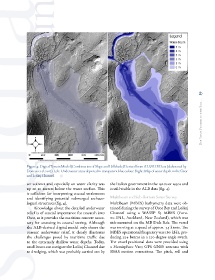
               Figure 4: Digital Terrain Model (Combination of Slope and Hillshade) Derived from ALS/ALB Data (elaborated by
               Doneus et al. 2017). Left: Underwater areas depicted in transparent blue colour. Right: Map of water depth in the Osor
               and Lošinj Channel

               ser scanner and especially on water clarity was   the Italian government in the 1920s or 1930s and
               up to 10 meters below the water surface. This   is still visible in the ALB data (fig. 4).
               is sufficient for interpreting coastal settlements
               and identifying potential submerged archaeo-  Multibeam and Sub-Bottom Sonar Survey
               logical structures (fig. 4).                Multibeam (MBES) bathymetry data were ob-
                   Knowledge about the detailed underwater   tained during the survey of Osor Bay and Lošinj
               relief is of crucial importance for research into   Channel using a WASSP S3 MBES (Furu-
               Osor, as it provides the maritime context neces-  no ENL, Auckland, New Zealand), which was
               sary for assessing its coastal setting. Although   side-mounted on the MB Dide Rak. The vessel
               the ALB-derived digital model only shows the   was moving at a speed of approx. 3.5 knots. The
               current underwater relief, it clearly illustrates   MBES operational frequency was 160 kHz, pro-
               the  challenges posed  by maritime  traffic  due   ducing 224 beams in a 120-degree angle swath.
               to the extremely shallow water depths. Today,   The vessel positional data were provided using
               small boats can navigate the Lošinj Channel due   a Hemisphere V103 GPS GNSS antenna with
               to dredging, which was probably carried out by   SBAS motion corrections. The pitch, roll and

