


Page 20 - Studia Universitatis Hereditati, vol 13(2) (2025)
P. 20
20

        studia universitatis hereditati, letnik 13 (2025), številka 2 / volume 13 (2025), number 2


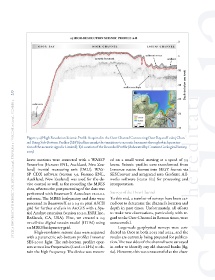
               Figure 5: a) High-Resolution Seismic Profile Acquired in the Osor Channel Connecting Osor Bay and Lošinj Chan-
               nel Using Sub-Bottom Profiler (SBP) (red line marks the transition to acoustic basement through which penetra-
               tion of the acoustic signal is Limited); b) Location of the Recorded Profile (elaborated by Croatian Geological Survey,
               2025)

               heave motions were corrected with a WASSP   ed on a small vessel moving at a speed of 3.5
               Sensorbox (Furuno ENL, Auckland, New Zea-   knots. Seismic profiles were transformed from
               land) inertial measuring unit (IMU). WAS-   Innomar  native  format  into  SEGY  format  via
               SP CDX software (version 3.9, Furuno ENL,   SESConvert and integrated into GeoSuite All-
               Auckland, New Zealand) was used for the de-  works software (v2021 R2) for processing and
               vice control as well as for recording the MBES   interpretation.
               data, whereas the postprocessing of the data was
               performed with BeamworX Autoclean v2020.2   Surveys of the Osor Channel
               software. The MBES bathymetry and data were   To this end, a number of surveys have been car-
               processed in BeamworX as a 0.5 m pixel ASCII   ried out to determine the channel’s location and
               grid for further analysis in ArcGIS with a Spa-  depth in past times. Unfortunately, all efforts
               tial Analyst extension (version 10.2.1, ESRI Inc.,   to make new observations, particularly with re-
               Redlands, CA, USA). First, we created a 0.5   gard to the Osor Channel in Roman times, were
               m-cell-size digital terrain model (DTM) using   unsuccessful.
               an MBES bathymetry grid.                        Large-scale geophysical surveys were con-
                   High-resolution seismic data were acquired   ducted in Osor in both 2023 and 2024, and the
               with a parametric sub-bottom profiler Innomar   results are currently being prepared for publica-
               SES-2000 light. The sub-bottom profiler oper-  tion. The two sides of the channel were surveyed
               ates at two low frequencies (6 and 10 kHz) to ob-  in order to identify any old channel banks (fig.
               tain the high frequency. The device was mount-  6a). However, this was unsuccessful as the chan-

